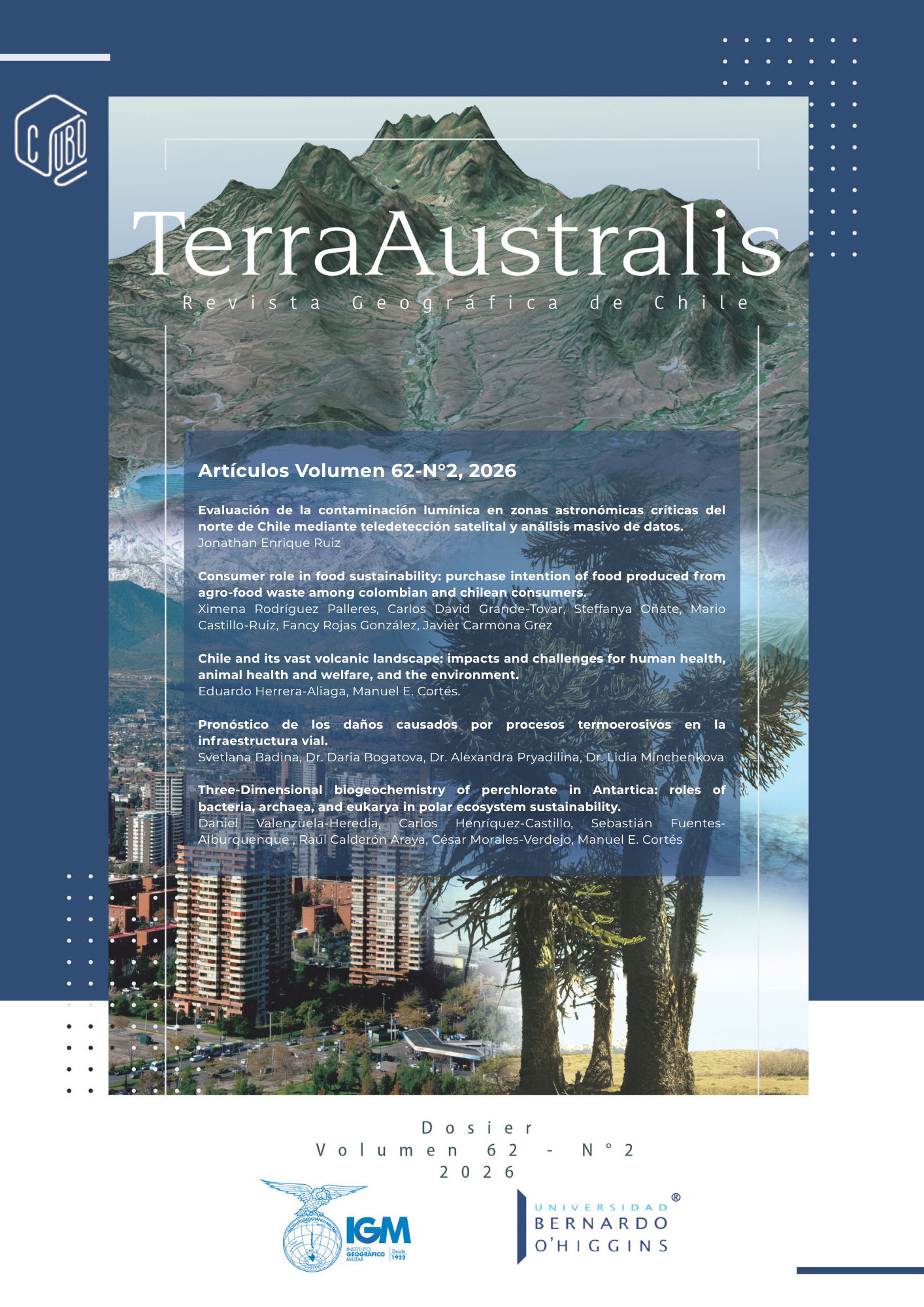
CONSUMER ROLE IN FOOD SUSTAINABILITY: PURCHASE INTENTION OF FOOD PRODUCED FROM AGRO-FOOD WASTE AMONG COLOMBIAN AND CHILEAN CONSUMERS
DOI:
https://doi.org/10.23854/07199562.2026622.rodriguezAbstract
Reducing food loss and waste is one of the most significant challenges facing modern agricultural and food systems, because it generates severe environmental, economic, and social impacts. In addition, it leads to the depletion of resources such as water, land, and energy. A strategy to manage food waste is transforming edible components into new foods for human consumption. Willingness to consume these products increases when consumers perceive higher nutritional value, health benefits, or positive environmental impact. Therefore, the aim of this work was to conduct a study in Colombia and Chile to evaluate the factors that may affect consumer preferences, purchase intention, and perceptions regarding the consumption of food derived from agri-food waste. In the study participated 385 people from 18 to 65 years of age or older of both sexes, of which 180 people were residents of Chile with Chilean nationality and 205 people were residents of Colombia and with Colombian nationality. The participants answered through a web questionnaire topic related to sociodemographic characteristics, attitude, norms and perceptions about acquiring food derived from agri-food waste. Consumers in both Chile and Colombia showed a moderately positive perception toward foods made from agri-food waste, especially when environmental and health benefits were emphasized. Despite favorable attitudes, actual purchasing behavior remained limited, indicating a gap between intention and action influenced by factors such as limited access, information, and market presence. The findings reinforce relevance of integrating sustainability principles, such as the circular economy, environmental protection, and conscious consumption, into consumers food choices.
Downloads
Downloads
Published
How to Cite
Issue
Section
License
Copyright (c) 2026 Revista Geográfica de Chile Terra Australis

This work is licensed under a Creative Commons Attribution 4.0 International License.
Copyright notice:
Revista Geográfica de Chile Terra Australis retains the economic rights (copyright) of the works published in the Revista Geográfica de Chile Terra Australis. The reuse of the content is allowed under a license:
CC BY
Recognition

This license allows others to distribute, remix, tweak and build upon your work, even for commercial purposes, as long as you are acknowledged as the author of the original creation. This is the most helpful license offered. It is recommended for maximum dissemination and use of the materials subject to the license.